Free Worldwide Shipping

30% Discount for you

Tax Free Shopping

20,000+ Satisfied Customers
Free shipping across India on orders above 1000/-


A bloke in Fremantle muttered to his mate, “I reckon the machine’s due.” The line hung in the salt air, thin as the evening mist. Players hear such things and assume luck bends to patience. Mathematics answers with a colder voice. When online casino house edge explained properly, the maths shows every wager carries a built‑in tilt toward the operator.
That tilt sits inside the game code, not in the air around the table. A designer who has shipped three hundred titles knows the difference between a fair shuffle and a programmed bias. The bias never disappears, yet it can be understood. A cautious researcher comparing every detail before committing will want the numbers laid bare. The following guide moves from first principles to a steadier head.
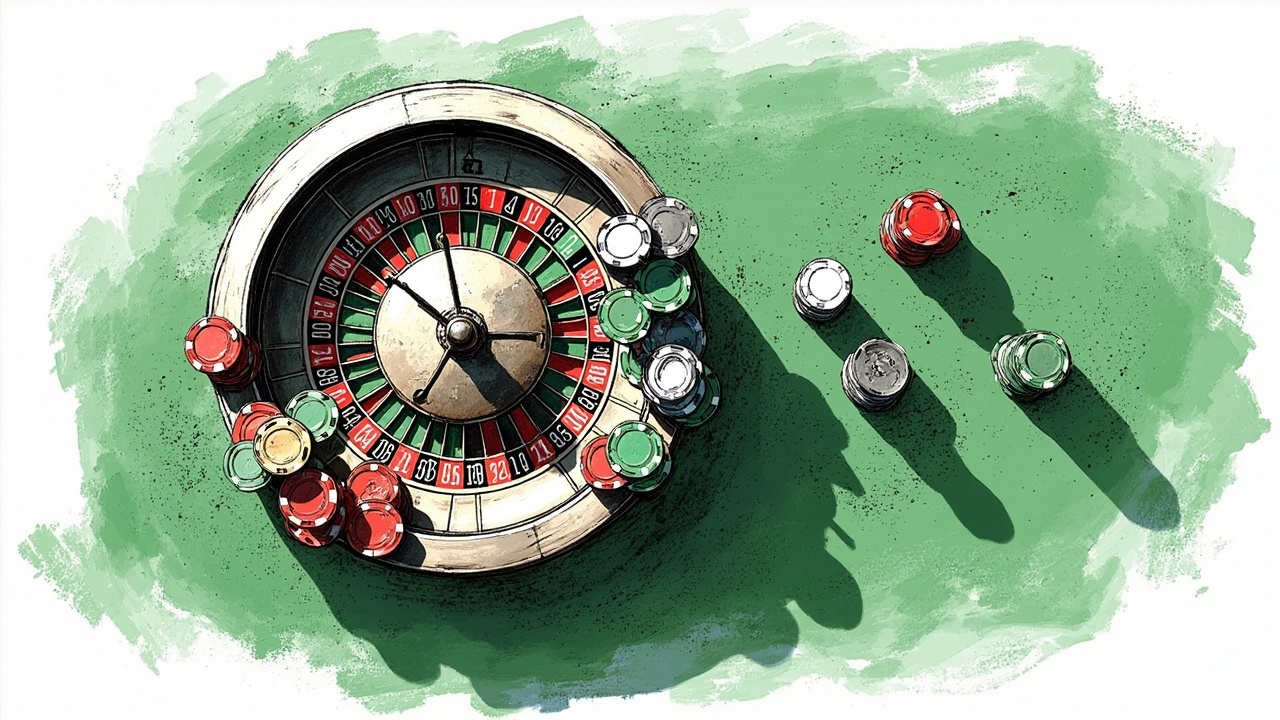
The house edge is a long‑run average, not a promise about the next spin. A slot can pay out generously for an hour and still keep its programmed margin intact. The edge lives in the gap between true odds and the payout offered. A player who treats each session as a single event misses the shape of the whole curve.
Numbers matter, yet the format of those numbers changes how people read them. A return‑to‑player figure describes the portion of wagered money a game is designed to return over time. The remainder is the operator’s theoretical hold. A greenhorn who confuses a short winning streak with a favourable game will usually pay for the mistake later.
A designer’s eye catches the same pattern across very different titles. A licensed entertainment slot and a plain three‑reel game can share an identical theoretical hold, yet feel entirely different on the screen. The glamour changes perception, not the arithmetic. Good design respects the player’s attention without pretending the maths has shifted.
Every wager rolls forward into a long sequence of repetitions. The edge reveals itself only when the sample grows large enough for noise to settle. A single hand, a single spin, a single race – each one is mostly randomness wearing a costume.
A practical way to judge a game is to read the published return figure before placing a cent. Say you deposit fifty dollars and play a title advertising a ninety‑six per cent return over millions of spins. The expectation is a slow, statistical drain, not a sudden grab. The wallet feels the effect across many sessions rather than one afternoon.
Currency controls and travel rules heavily shape Asian VIP gambling flows. Those same controls influence how operators structure payment paths and which markets receive which products. A player in Western Australia watching the clock from Perth will notice the three‑hour gap to the east coast. Late‑night play under AWST stretches past midnight while eastern states sit three hours ahead on AEST.
Terms and conditions hide in plain sight, usually near the payment section. A careful reader scans for wagering requirements, maximum bet limits, and withdrawal caps. Each clause changes the effective cost of play more than the advertised return figure does. The edge is only one part of the total picture.
A step‑by‑step check keeps the process manageable for a cautious researcher. Read the payment page first, then the bonus terms, then the game info screen. Compare the stated return with the maximum bet allowed on that title. Note the withdrawal window before funding the account. Stop when any clause feels vague rather than precise.
Henry Henderson, Head of Operator Partnerships, Murray River Gaming Research, says operators should publish return information in a consistent place on every title page. He adds that inconsistent placement helps nobody, especially not a player comparing options late at night. A clear layout reduces the temptation to guess.
A mate who has never touched a digital table needs a narrow starting point. The aim is understanding, not chasing a big win on day one. A small, fixed limit teaches more than a large, anxious deposit ever will. The following steps suit a greenhorn who wants the numbers before the noise.
Pick one title with a published return figure and read the game info screen twice. Set a session limit in dollars and a time limit in minutes, then stick to both. Record the result after each session rather than after each spin, because the short run lies. Review the record after a week, not after an hour, so the pattern has room to show itself.
A designer who has built three hundred games knows that feedback timing shapes behaviour more than graphics do. A rapid stream of near‑misses can feel like progress when it is only decoration. A steady player watches the ledger, not the flashing lights. The ledger tells the truth about the edge over time.
Local habits change how the numbers feel in practice. A late session under AWST can run well past midnight while a player in Sydney sits three hours ahead on AEST. The clock difference matters when a player compares bonuses or tracks a multi‑state withdrawal. Time zones are not a trivial detail for anyone playing across the continent.
Community support matters when play stops being fun. A neighbour link to the community services page points toward practical help for people who need it. The same caution applies to any leisure activity where money and mood meet. A responsible player knows where to turn before trouble grows.
Dylan King, Affiliate Partnerships Director, Harbour City Gaming Review, says comparison content works best when it lists limits and timeframes plainly. He notes that vague promises tend to attract the wrong kind of attention from readers who are simply trying to stay safe. Clear language protects both the reader and the site.
Lucas White, Sports Betting Analyst, Red Centre Analytics, points out that return figures and betting limits answer different questions and should not be mixed up. He warns that a high return figure on a title with a tight max bet still restricts how a session can unfold. A reader comparing both numbers gets a fuller picture than one chasing a single headline.
A final practical move is to treat the return figure as a planning tool, not a promise. Choose a title, note the published return, set a dollar limit, and set a clock. Play only within those bounds and stop when either one is reached. The edge stays visible, and the player stays in control. ripper casino ndb
A designer’s last test for any title is whether a player can walk away with a clear record of what happened. A tidy ledger, a fixed limit, and a clock that actually stops – those three things beat any anecdote about a machine being due. The maths was explained at the start, and it still holds at the end.
No account yet?
Create an Account